RTO Rules for CNG Kit in India – Approval, Safety Guidelines & Penalties Explained29 January 2026
Introduction
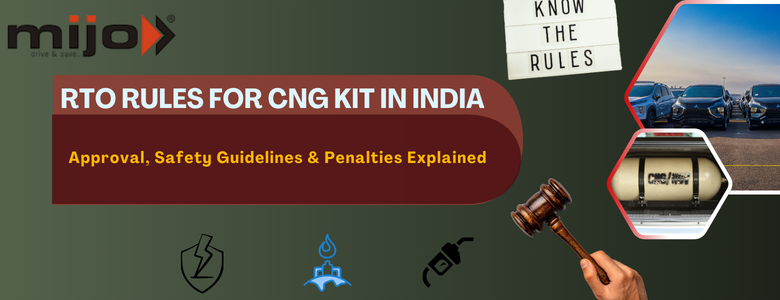
Understanding RTO rules for CNG kit installation is crucial for vehicle owners in India. This comprehensive guide covers approval processes, safety standards, and legal requirements to help you convert your petrol car to CNG legally and safely.
What Are RTO Rules for CNG Kit in India?
The RTO rules for CNG kit are regulations established by the Ministry of Road Transport and Highways to ensure vehicle safety during fuel conversions. These rules mandate that any CNG installation must receive proper authorization before use on public roads.
Key aspects include:
- Mandatory RTO endorsement on registration certificate
- Use of only ARAI-approved CNG kits
- Compliance with prescribed safety standards
- Regular inspection and maintenance protocols
RTO Rules for Installing CNG Kit in a Car
Pre-Installation Requirements
Before proceeding with CNG installation, the RTO rules for installing CNG kit in car require owners to verify their vehicle’s eligibility. Most petrol vehicles qualify, but diesel conversions face restrictions in several states.
Approved Kit Standards
Only ARAI (Automotive Research Association of India) certified kits meet the RTO rules for CNG kit specifications. The best CNG kit brand in India includes manufacturers like Lovato, Tomasetto, and Landi Renzo, which hold valid certifications.
Installation Center Authorization
Choose workshops authorized by the State Transport Authority. These centers ensure proper installation following RTO safety guideline for CNG protocols.
RTO Rules for Petrol to CNG Conversion
The RTO rules for petrol to CNG conversion outline a systematic approach:
Step 1: Select an ARAI-approved CNG kit suitable for your vehicle model Step 2: Visit an authorized conversion workshop Step 3: Complete the installation with certified technicians Step 4: Obtain installation certificate from the workshop Step 5: Submit RTO application for endorsement
When you convert petrol to CNG kit car, the engine modifications must not exceed prescribed limits. The RTO rules for petrol to CNG conversion prohibit any changes that affect the vehicle’s structural integrity.
How to Get CNG Kit Approved by RTO? (Step-by-Step Process)
Application Submission
Visit your local RTO office or use the Parivahan portal for online application. The RTO rules for CNG kit require form submission within 7 days of installation.
Inspection Scheduling
Book a vehicle inspection appointment. Officers verify the kit’s authenticity and installation quality against RTO safety guideline for CNG standards.
Endorsement Process
Upon approval, the RTO updates your registration certificate with CNG fuel type. This endorsement is mandatory under the RTO rules for CNG kit framework.
Timeline
The entire approval process typically takes 15-30 days, depending on your regional RTO’s workload.
Documents Required for CNG Kit RTO Approval
Essential documents required for CNG kit RTO approval include:
- Original Registration Certificate (RC)
- Valid insurance certificate
- ARAI approval certificate of the CNG kit
- Installation certificate from authorized workshop
- Form 41 (Application for alteration)
- PUC certificate
- Chassis and engine number imprint
- Passport-size photographs
- Identity and address proof
Having complete documents required for CNG kit RTO approval ensures smooth processing without delays or rejections.
RTO Safety Guidelines for CNG Kits
Mandatory Safety Measures
The RTO safety guideline for CNG mandates specific safety equipment:
Cylinder Specifications: Only Type-1 seamless cylinders approved by Chief Controller of Explosives Pressure Relief Device: Automatic pressure release mechanism at 260 bar Emergency Shut-off Valve: Manual valve accessible to driver Leak Detection: Electronic system with dashboard warning
Safety Checks During Inspection
RTO inspectors verify the RTO safety guideline for CNG compliance through:
- Cylinder mounting security and positioning
- Proper ventilation for cylinder compartment
- Electrical connections and grounding
- Fuel line routing and protection
- Pressure gauge functionality
- Safety valve operation
The RTO safety guideline for CNG requires annual re-inspection to maintain certification validity.
Penalty for CNG Kit Without RTO Approval
Operating a vehicle with unauthorized CNG installation attracts serious consequences. The penalty for CNG kit without RTO approval includes:
- Fine ranging from ₹5,000 to ₹10,000
- Vehicle seizure until compliance
- Insurance claim rejection
- Registration cancellation in severe cases
Additionally, the penalty for CNG kit without RTO approval may increase for repeat offenders. Traffic police can impound vehicles during routine checks if proper endorsement is missing.
Why RTO Approval Is Important for Insurance & Resale
Insurance Implications
Insurance companies deny claims for vehicles with unauthorized modifications. Following the RTO rules for CNG kit ensures your policy remains valid during accidents.
Resale Value Protection
RTO-approved conversions maintain vehicle documentation integrity, facilitating smoother resale transactions. Buyers prefer vehicles with proper CNG endorsements on RC.
This complete CNG vehicle guide emphasizes that legal compliance protects your investment and provides peace of mind.
Common Mistakes Car Owners Make During CNG Installation
Mistake #1: Choosing Uncertified Kits
Many owners prioritize cost over quality, selecting non-ARAI kits. This violates RTO rules for CNG kit and compromises safety.
Mistake #2: Delaying RTO Approval
The common mistakes car owners make during CNG installation include postponing the endorsement process, risking penalties.
Mistake #3: DIY Installation Attempts
Installing CNG kits without professional expertise violates the RTO safety guideline for CNG and creates hazards.
Mistake #4: Incomplete Documentation
Failing to maintain proper paperwork among common mistakes car owners make during CNG installation leads to approval rejection.
Mistake #5: Ignoring Maintenance Schedules
Regular servicing as per rto authorised cng kit guidelines ensures optimal performance and safety.
FAQ
Q1: How long does RTO approval take for CNG kit? The process typically takes 15-30 days from application submission.
Q2: Can I install CNG in a diesel car? Most states prohibit diesel to CNG conversions due to technical complications.
Q3: Is annual inspection mandatory for CNG vehicles? Yes, the RTO safety guideline for CNG requires yearly safety checks.
Q4: What happens if I sell a car with unapproved CNG? Both buyer and seller may face legal complications and fines.
Q5: Can I remove CNG kit later? Yes, but you must inform RTO and update your RC accordingly following RTO rules for CNG kit.
Conclusion
Adhering to RTO rules for CNG kit ensures legal compliance, safety, and financial protection. Follow proper approval procedures, maintain documentation, and choose authorized service centers for a hassle-free CNG conversion experience that enhances your vehicle’s efficiency.