LPG reducers

LPG pressure regulation, model by model.

MIJO's LPG reducer range covers Sequential injection, electronic Conventional and vacuum-operated applications. Compare vaporisation method, regulation stages, pressure, connections and capacity to identify the correct model.

LPG reducer range

Sequential LPG reducers

Sequential LPG reducers use engine-coolant heat to vaporise the fuel and maintain the calibrated working pressure required by the injector rail. MIJO's Sequential LPG reducer is approved to ECE R67, and its setting is matched to injector sizing, engine demand and calibration.

SR06LPG LPG reducer
01 · Sequential
ECE R67

SR06LPG

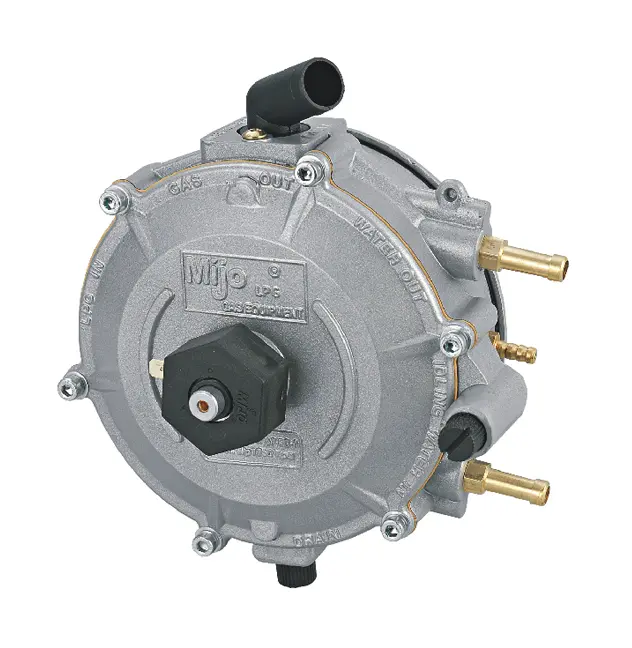
SR06LPG is MIJO's electronic single-stage reducer for Sequential LPG injection. Engine coolant supplies the heat needed to vaporise liquid LPG while the reducer delivers the stable working pressure required by the injector rail.

The die-cast aluminium unit accepts up to 30-bar inlet pressure and offers adjustable 0.8–2.5-bar outlet pressure for applications up to 240 HP. MIJO sets the working pressure to suit the injector sizing, engine demand and calibration.

Key characteristics

  • SystemSequential LPG injection.
  • Working principleCoolant-assisted vaporisation and regulation.
  • Outlet adjustmentAdjustable from 0.8 to 2.5 bar.
  • Application capacitySuitable for applications up to 240 HP.

Technical specifications

Weight
1.52 kg
Dimensions
150 × 110 × 115 mm
Body
Die-cast aluminium
Maximum inlet pressure
30 bar
Outlet pressure
Adjustable 0.8–2.5 bar
Electrical
12 V DC · 17 W
Inlet connection
Ø6 mm / M10×1
Outlet connection
Ø12 mm
Engine power
Up to 240 HP
Approval
ECE R67
Enquire about SR06LPG

LPG reducer range

Conventional LPG reducers

Conventional LPG reducers combine vaporisation with staged pressure control before gas reaches the mixer. The MEV02 electronic reducer is approved to ECE R67; MVV01 is the separate vacuum-operated route for suitable carburettor applications.

MEV02 LPG reducer
02 · Conventional
ECE R67

MEV02

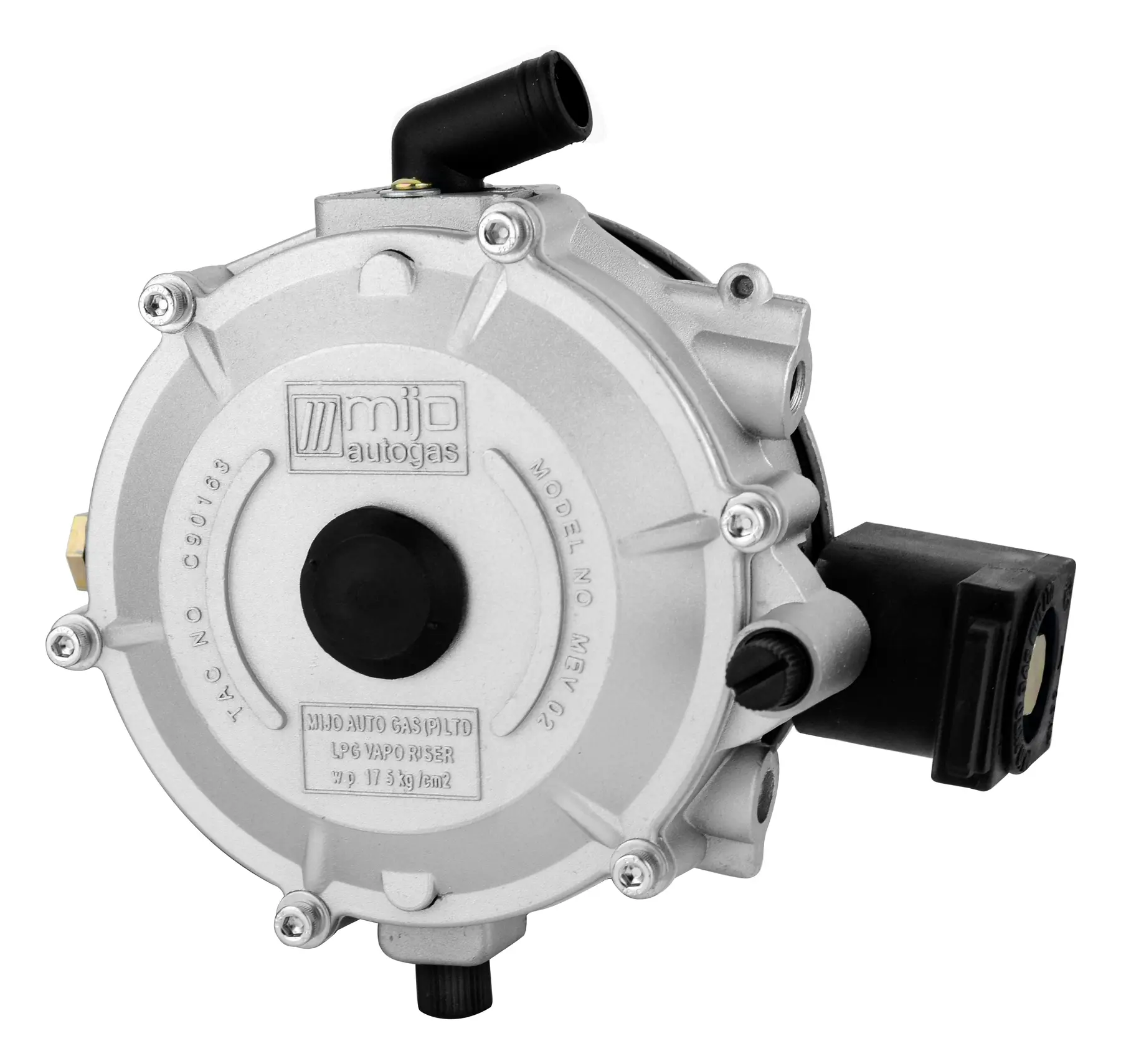
MEV02 is a two-stage electronic vaporiser-reducer for Conventional LPG systems. Engine coolant provides the heat required to vaporise liquid LPG while the two regulation stages supply controlled gas pressure to the mixer.

Its die-cast aluminium body accepts up to 30-bar inlet pressure. MEV02-140 and MEV02-140 Plus versions cover applications up to 140 HP and above 140 HP, with the version selected for the engine and mixer configuration.

Key characteristics

  • SystemElectronic Conventional LPG.
  • Working principleTwo-stage vaporisation and pressure regulation.
  • Thermal inputEngine-coolant-assisted LPG vaporisation.
  • Capacity versionsMEV02-140 and MEV02-140 Plus.

Technical specifications

Weight
1.67 kg
Dimensions
190 × 191 × 110 mm
Body
Die-cast aluminium
Maximum inlet pressure
30 bar
Electrical
12 V DC · 17 W
Inlet connection
Ø6 mm / M10×1
Outlet connection
Ø18 mm
MEV02-140
Up to 140 HP
MEV02-140 Plus
Over 140 HP
Approval
ECE R67
Enquire about MEV02
MVV01 LPG reducer
03 · Conventional

MVV01

MVV01 is a two-stage vacuum-operated reducer for Conventional LPG systems. It responds to engine vacuum rather than an electronic control signal, making it MIJO's dedicated reducer for suitable carburettor and pneumatic applications.

The die-cast aluminium unit accepts up to 30-bar inlet pressure. MVV01-140 and MVV01-140 Plus versions cover applications up to 140 HP and above 140 HP, with selection based on the engine and mixer arrangement.

Key characteristics

  • OperationVacuum / pneumatic control.
  • ApplicationSuitable Conventional carburettor systems.
  • ArchitectureTwo-stage LPG pressure reduction.
  • Capacity versionsMVV01-140 and MVV01-140 Plus.

Technical specifications

Weight
1.60 kg
Dimensions
195 × 201 × 118 mm
Body
Die-cast aluminium
Maximum inlet pressure
30 bar
Operation
Vacuum / pneumatic
Inlet connection
Ø6 mm / M10×1
Outlet connection
Ø18 mm
MVV01-140
Up to 140 HP
MVV01-140 Plus
Over 140 HP
Enquire about MVV01

Next step

Need the right LPG reducer for an application?

Share the exact reducer model or system type, engine power, vehicle, fittings, installation scope and market requirement. Current reducer pricing depends on the confirmed model, application, tax and quotation date.